Learning to trade, from zero
No jargon and no promises. This is what forex trading actually is, what it costs, and the handful of ideas you must understand before you risk a single dollar.
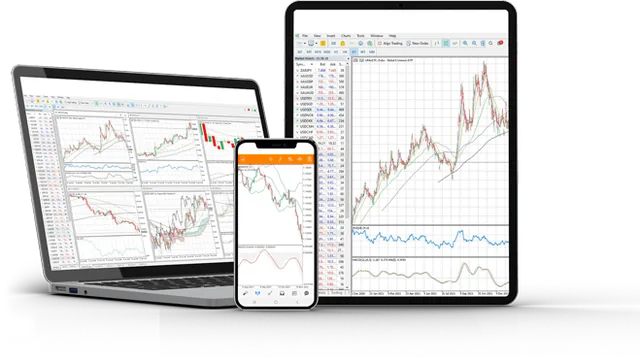
Both platforms
Live chart, on the phone you already have


FSA-licensed broker · Licence SD133
What you are actually trading
A forex trade is a bet on one currency against another — buy EUR/USD and you profit if the euro strengthens against the dollar. Gold, oil and indices work the same way through CFDs: you trade the price movement without owning the thing.
Prices move in pips. Your position size is measured in lots. Those two numbers decide how much each move is worth to you.
The four ideas that decide whether you survive
One standard lot of EUR/USD is 100,000 units — about $10 per pip. On a $100 account that is reckless. Start at 0.01 lots.
1:500 means $100 controls $50,000. It multiplies profit and loss equally. Leverage is not free money; it is a bigger steering wheel.
Your open positions reserve part of your balance. If the market moves against you far enough, positions are closed automatically — that is a margin call.
The price at which you accept the trade was wrong. Traders who survive decide this before entering, not while losing.
What it costs to trade
Your cost is the spread (and commission on a Zero account). Overnight financing is the other cost: it is charged on a position held past the daily close unless that account has swap-free status, which is granted on request rather than switched on by default. Check which you hold before you plan to carry a position for a week.
Work out the cost of a trade before you place it with our pip value and margin calculators.
The mistakes that end most first accounts
- Trading a size that makes a normal move feel catastrophic
- Adding to a losing position to 'average down'
- Moving the stop loss further away instead of accepting the loss
- Trading right into high-impact news without meaning to
- Believing anyone who guarantees a return
The only calculation you need before every trade
Most beginners choose a position size by feel, or by what the platform suggests, and then discover their risk afterwards. Do it the other way round and most of the damage never happens.
Decide first what you are willing to lose on this one trade. One to two per cent of the account is the range experienced traders use — on a $200 account that is $2 to $4, which sounds absurdly small until you notice it is the reason they still have an account. Then measure the distance from your entry to the stop, and let those two numbers produce the size.
The size is the output, never the input. If the calculation gives you a position smaller than the platform will let you open, the honest conclusion is that the stop is too far away for your balance — not that you should skip the stop.
| Account | Risk 2% | Stop distance | Position |
|---|---|---|---|
| $200 | $4 | 20 pips (EURUSD) | 0.02 lots |
| $200 | $4 | $4 move (gold) | 0.01 lots |
| $1,000 | $20 | 20 pips (EURUSD) | 0.10 lots |
| $1,000 | $20 | $20 move (gold) | 0.01 lots |
Position size is the output of the calculation, never the input.
A first month that actually teaches you something
Four weeks, in this order. It is slower than you want and faster than most people manage.
Demo only. Place orders, set and move a stop, close part of a position, read the numbers at the bottom of the screen. The goal is that none of the mechanics surprise you later.
Pick a single instrument and a single time of day and stay there. Trading five things at random hours produces experiences, not experience.
Entry, exit, size, and one line on why. The journal is where the pattern shows up, and the pattern is almost never the one you expected.
Small enough that a loss is annoying rather than frightening. The point of going live is not profit, it is finding out what you do differently when the money is real.
Common questions
How much money do I need to start?
$100 opens a live account, but start on a free demo — it costs nothing and teaches the platform.
Can I make a living from trading?
A few do, after years. Most who try do not. Treat early trading as tuition, not income.
How long does it take to learn?
Months to be competent with the mechanics; longer to be consistent. Anyone selling a shortcut is selling something.
Is trading gambling?
It becomes gambling without a tested method and risk control. With them, it is a business with a statistical edge — which still loses regularly.
How much should I risk on one trade?
One to two per cent of the account. On a $200 account that is $2 to $4 — small on purpose, because surviving the learning period is the whole objective.
Which instrument should a beginner start with?
Not gold, even though it is what most people here start with. A major currency pair moves less per unit of size, which makes the first mistakes cheaper.
Do I need to pay for a course?
No. Everything in the first three months is available free, including here. Be careful with anyone selling a course that comes with a signal group attached.