
Free demo account, no sign-up
Practise on real market prices with virtual money. Choose your platform, account type, leverage and starting balance, and your credentials appear on screen in seconds.
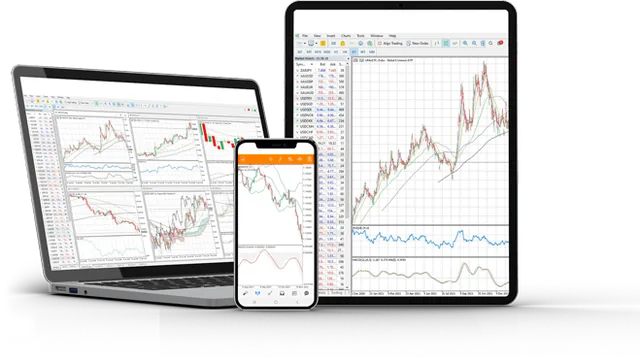
Both platforms
Live chart, on the phone you already have


FSA-licensed broker · Licence SD133
What a demo is genuinely good for
- Learning the platform — where the buttons are, before money is at stake
- Testing a strategy or an EA across enough trades to mean something
- Feeling what leverage does to an account — the lesson that costs the most in real money
- Checking our spreads and execution before you deposit anything
And what it cannot teach you
A demo cannot teach you how you behave when the money is real. Most traders are disciplined on a demo and impulsive with $500 of their own — which is why we suggest moving to a small live account sooner rather than trading a virtual million for months.
How to open one
MT5 or MT4; Standard, Zero, Cent or VIP.
Anything up to 1:500, and whatever starting balance you want to practise with.
A code on WhatsApp and one by email — this is how we send your credentials.
Your login, password and server appear on screen and arrive by email.
What a demo really shows you
A demo account is the right tool for learning the platform, testing how orders behave, and seeing whether a strategy does what you think it does. It runs on live market prices, so the market you see is honest.
What it cannot show you is yourself. With no real money at stake you will move a stop you would not have moved, hold a loss you would have closed, and open a position four times larger than you ever would. That gap — not the strategy — is why most people succeed on demo and struggle live.
So the single most useful thing you can do is set the demo balance to the amount you actually intend to deposit. Practising with $100,000 when you plan to fund $300 teaches you nothing transferable.
A demo shows you the market honestly. It does not show you yourself.
Where demo and live genuinely differ
- Execution. Demo fills are close to instant and near the requested price. Live orders compete for real liquidity, so slippage exists, particularly around news.
- Spread in fast markets. Demo widening is simulated; live widening is real and can be sharper.
- Emotion. The one that actually decides outcomes, and the one demo cannot reproduce at all.
- Swap. Overnight financing may not be modelled the way your live account is, particularly if you intend to trade swap-free.
How long to stay on demo
Long enough to stop making mechanical mistakes — clicking buy instead of sell, misplacing a decimal in the lot size, forgetting a stop. That usually takes days, not months.
Beyond that, more demo time has diminishing returns, because the thing you still need to learn only appears when the money is real. The sensible next step is not a longer demo but a smaller live account. A Cent account trades the same markets at a hundredth of the position size, so the pressure is genuine and the damage is not.
Common questions
Is the demo account really free?
Yes, entirely, and there is no sign-up form to complete.
How long does the demo last?
You can keep practising as long as you like.
Are demo prices the same as live?
You trade real market prices. Execution on a live account also depends on liquidity, which a demo cannot fully reproduce.
Can I open more than one demo?
Yes — up to three at a time from the client portal.
Does the demo use real prices?
Yes, live market prices. Execution, slippage and liquidity can still differ from a live account.
What balance should I choose?
The amount you actually plan to deposit. Practising with a balance you will never trade teaches habits that do not transfer.
How long should I practise before going live?
Until the mechanics are automatic — usually days. After that, a small live account teaches you more than more demo time, because it introduces the part demo cannot simulate.
Does the demo expire?
It can be reset or closed at any time, and it creates no obligation either way.