
Scalping and hedging, allowed
Some brokers quietly punish the strategies that actually make money in a ranging market. Here are our rules in plain language — what is allowed, on which account, and what it costs.
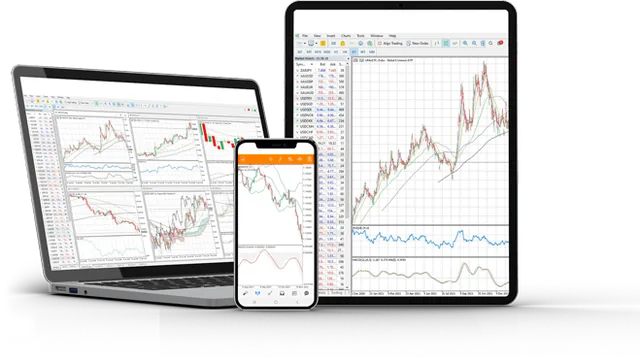
Both platforms
Live chart, on the phone you already have


FSA-licensed broker · Licence SD133
The rules
| Strategy | Allowed | Best account |
|---|---|---|
| Scalping | Yes | Zero (raw spread) |
| Hedging (long and short together) | Yes | Any |
| Expert advisors / bots | Yes | Zero or Standard |
| News trading | Yes | Zero |
| Copy trading | Coming soon | — |
What scalpers should actually check
- Total cost per trade — spread plus commission, not the headline number
- Execution speed and how far orders slip when it matters
- Whether your EA is allowed to run at all (ours are)
- VPS — if your robot must run 24 hours, your laptop is not the place for it
Hedging, and what it is really for
Holding a long and a short on the same instrument locks your loss rather than removing it — the spread is still paid, and the position still needs margin. Used well it buys you time across a news event; used to avoid admitting a bad trade, it just delays the decision.
It is allowed here because it is your account and your strategy. Just know what it costs before you use it.
What actually decides whether a scalp is viable
Scalping being allowed is the easy part. Whether it works is arithmetic, and the arithmetic is unforgiving at small targets.
Every round trip costs you the spread plus any commission. If your target is five pips and the cost is one, you are giving away 20% of the move before you start. If your target is one pip and the cost is one pip, you need to be right roughly twice as often just to break even.
That is why scalpers care about the Zero account rather than the headline leverage number. Cost per round trip is the whole game at short horizons, and it is the one variable you can actually control.
| Target | Cost 1.0 pip | Cost 0.2 pip |
|---|---|---|
| 1 pip | 100% of the move | 20% of the move |
| 5 pips | 20% | 4% |
| 20 pips | 5% | 1% |
| 100 pips | 1% | 0.2% |
At a five-pip target, a one-pip cost is a fifth of the move — before you are right about anything.
Execution, slippage and the minutes around news
A scalping strategy lives or dies on fills. Two things are worth knowing before you build one:
Slippage is not a fee, it is a fact of a moving market. A market order takes the price available when it arrives, and in a fast market that is not always the price you saw. Limit orders fill at your price or not at all — which is the trade-off you are choosing between.
Spreads widen around scheduled news. Non-farm payrolls, CPI, central-bank decisions. A strategy that looks profitable in backtesting on a fixed spread often turns out to have made all of its money in exactly the windows where the real spread would have eaten it.
Hedging is not a stop loss
Opening an opposite position on the same instrument freezes your loss where it is. It does not remove it, and it costs you: you keep paying the spread, both legs need margin, and you still have to decide which one to close first — which is the same decision you were avoiding, only now with two positions.
Where it genuinely earns its place is event risk: holding through a scheduled announcement you cannot exit around, or bridging a weekend without closing a position you want to keep.
It is allowed here because it is your account and your strategy. Just be honest with yourself about which of the two reasons you are using it for.
Common questions
Is scalping allowed at TNFX?
Yes, on all account types, with the Zero account best suited to it.
Is there a minimum holding time?
There is no minimum holding time for scalping on standard trading accounts. Bonus and loyalty programmes have their own eligibility rules.
Can I run an expert advisor?
Yes. MT4 and MT5 both support EAs, and we offer VPS hosting so yours runs without your computer.
Is hedging allowed?
Yes — you can hold long and short positions on the same instrument.
Do you requote orders?
Market orders fill at the best available price. In a fast market that can differ from the price on screen — that is slippage, and it can go in your favour as well as against you.
Can I hedge between two of my own accounts?
Technically yes, but understand what it costs: two spreads, two lots of margin, and no net exposure. Using it to farm a bonus or a swap-free benefit is covered by clause 21.
Does hedging reduce my margin requirement?
Not to zero. Both legs occupy margin, and a hedged position can still be closed out if your equity falls far enough. Treat it as frozen, not free.