
Why you abandon the plan
The demo worked. The strategy tested fine. Then real money moved and you did something else entirely. That gap is the whole subject.
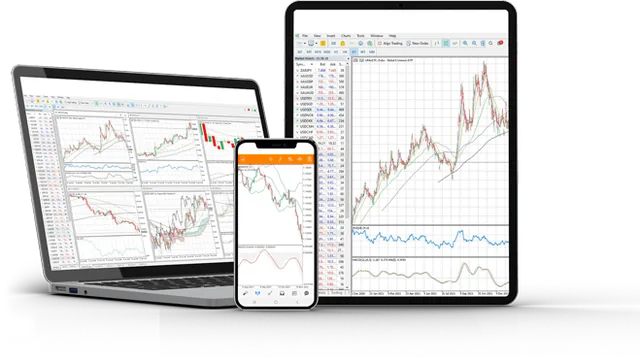
Both platforms
Live chart, on the phone you already have


FSA-licensed broker · Licence SD133
The gap nothing free can close
A demo account shows you the market honestly. It cannot show you yourself, because nothing is at stake. The moment money is real, three things change: you close winners early to make the good feeling certain, you hold losers because closing makes the loss final, and you size up after a win because you feel sharp.
None of those are analysis failures. They are the same person, with the same strategy, behaving differently — and they explain more blown accounts than every wrong forecast combined.
This is why a small live account teaches more than a large demo. You need the discomfort at a size where it is instructive rather than destructive.
The three that cost the most
- Moving the stop. You decided where you were wrong. Then price arrived there and you decided you were not wrong yet. This single habit ends more accounts than any other.
- Averaging down. Adding to a losing position feels like conviction and is arithmetic working against you — you now need a bigger move to break even, on a position already going the wrong way.
- Revenge trading. The trade taken immediately after a loss, to get it back. It is the only trade in your week chosen by emotion rather than by setup, and it is usually larger than the one before it.
What actually helps
Not willpower. Willpower is what you are running low on precisely when the market is moving. Structure works better than resolve.
Decide before. Entry, stop, size and target written down before the position exists. A decision made in advance is made by a calmer person than the one watching the screen.
Trade smaller than feels interesting. Almost every psychology problem is a sizing problem wearing a disguise. If a normal move feels frightening, the position is too big — no amount of discipline fixes that.
Keep a journal. Entry, exit, size, and one line on why. The pattern shows up within a month, and it is almost never the one you expected. Most people discover their losses cluster in one instrument, one hour, or one emotional state.
Most psychology problems are sizing problems wearing a disguise.
A realistic expectation
Nobody removes emotion from trading, and the people claiming they have are selling something. The goal is narrower: make the decisions that matter while calm, then execute them mechanically while not.
That is achievable, and it is mostly logistics — writing things down, sizing so the outcome does not frighten you, and stopping for the day at a loss limit you set in advance.
Common questions
Why do I trade well on demo and badly with real money?
Because nothing is at stake on a demo. Real money changes when you close winners and how long you hold losers. Start live at a size where that lesson is affordable.
How much should I risk per trade?
One to two per cent of the account. On $200 that is $2 to $4 — small on purpose, because surviving the learning period is the objective.
How do I stop moving my stop loss?
Place it when you open the position and treat it as already spent. If you cannot leave it alone, the position is too large.
Is a trading journal really necessary?
It is the cheapest edge available. The pattern in your losses appears within a month and is rarely what you assumed.
How do I recover after a big loss?
Stop for the day. The trade taken to win it back is the one chosen by emotion, and it is usually larger than the one that caused the problem.