
Spreads from 0.0 pips
The spread is the price of entering a trade, and on short-term strategies it is the difference between a system that works and one that bleeds. Here is exactly what you pay at TNFX.
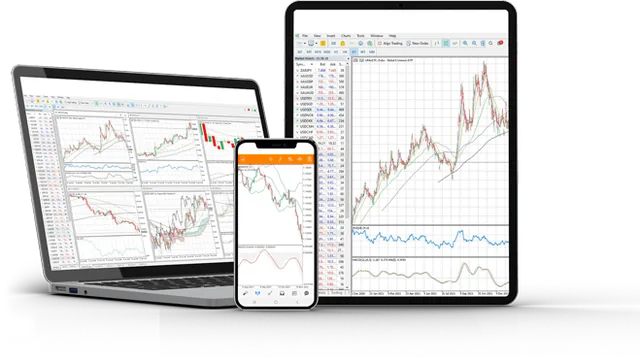
Both platforms
Live chart, on the phone you already have


FSA-licensed broker · Licence SD133
Typical spreads
These are typical values in normal market conditions. Every broker's spreads widen around major news and at the daily rollover — anyone claiming otherwise is not showing you the whole picture.
| Instrument | Zero account | Standard account |
|---|---|---|
| EUR/USD | from 0.0 pips + commission | from 1.0 pip |
| Gold (XAUUSD) | from 15 cents | from 25 cents |
| GBP/USD | from 0.1 pips | from 1.2 pips |
| USD/JPY | from 0.1 pips | from 1.1 pips |
| US30 | from 1.0 point | from 2.0 points |
What a round turn actually costs
Compare the round-turn total, not the headline spread.
Zero or Standard — which is actually cheaper?
A Zero account shows a raw spread near zero and charges commission; a Standard account has no commission but a wider spread. For most retail sizes the total cost is close, and the right choice depends on how often you trade.
Trade rarely, in larger size? Standard is simpler. Scalp, or trade gold intraday? Zero almost always wins once you count the pips saved per trade.
- Use our pip value calculator to price a trade before you take it
- Compare during London hours, not at 3am when every broker looks wide
- Count spread + commission together — that is your real cost
Execution and slippage
A tight spread is worthless if your order fills somewhere else. Slippage is the gap between the price you clicked and the price you got — it happens at every broker in fast markets, but its size depends on the execution model.
TNFX executes at market with no dealing-desk intervention on the price you are shown. In calm conditions most orders fill at or within a fraction of the quoted price; around high-impact news, expect movement and size your position accordingly.
Spread plus commission is the only number that matters
Brokers advertise the half of the cost that flatters them. An account showing 0.0 pips usually charges a commission per lot; an account showing no commission has the cost built into a wider spread. Neither is dishonest, but comparing one broker's spread against another's total is how traders end up paying more than they meant to.
To compare properly, convert everything to one number: the round-turn cost of trading one standard lot of the pair you actually trade. On a Zero-type account, that is the raw spread in pips plus the commission in and out. On a Standard account, it is simply the spread. Then compare like for like.
The second thing traders miss is that spread is not constant. It is tightest when the market is deepest and widest when it is thin — which, for traders in Iraq, matters more than usual because of when the local day falls.
When spreads are tightest for traders in Iraq
Baghdad time sits three hours ahead of London in winter and two in summer, which puts the most liquid part of the trading day squarely in the Iraqi afternoon and evening.
The London session opens late morning Baghdad time and runs into the afternoon. The overlap between London and New York — the deepest liquidity of the entire day, and therefore the tightest spreads — falls in the Iraqi evening. If you have flexibility about when you trade, that window costs you the least.
The opposite is also worth knowing. Spreads widen around the daily rollover and in the thin hours after New York closes, and they widen sharply in the seconds around major economic releases. A strategy that looks profitable on a backtest using average spreads can be unprofitable in practice if it happens to trade mostly in the expensive hours.
Costs that are not the spread
- Swap. Held positions are financed overnight, which is a cost or a credit depending on direction. On a swap-free account there is no financing charge at all.
- Slippage. The difference between the price you clicked and the price you got. It runs both ways, but it is worst in thin markets and around news.
- Conversion. If your account currency differs from the currency you deposit in, the conversion has a cost. Holding your account in the currency you fund it with avoids paying it twice.
- Inactivity. Dormant accounts may carry a fee after a published period. It never exceeds your balance and never pushes an account negative.
Common questions
What is the lowest spread at TNFX?
From 0.0 pips on major FX pairs on the Zero account, plus commission. Gold typically starts around 15 cents.
Is there commission?
On the Zero account, yes — that is the trade-off for a raw spread. Standard, Cent and VIP accounts have no separate commission.
Do spreads widen?
Yes, at every broker: around major news, at the daily rollover and on thin liquidity. Typical figures describe normal conditions.
Which account is best for scalping?
Zero — the raw spread matters most when you take many trades a day.
Is a zero-spread account always cheaper?
No. Zero-spread accounts carry a commission per lot. They work out cheaper for larger or more frequent trading, and more expensive for small occasional trades. Compare the round-turn total, not the headline.
What time of day are spreads tightest in Iraq?
The London-New York overlap, which falls in the Iraqi evening, has the deepest liquidity and the tightest spreads. The thin hours after New York closes are the most expensive.
Do spreads widen around news?
Yes, and sharply. In the seconds around a major release, liquidity thins and spreads can widen several times over. This is a market condition, not a broker charge.
Does a swap-free account cost more in spread?
No. Islamic status removes the overnight financing charge; it does not change your spread or commission.