
Order types
Every order is a trade-off between certainty of execution and certainty of price. You can have one or the other, never both, and knowing which you are choosing is most of the skill.
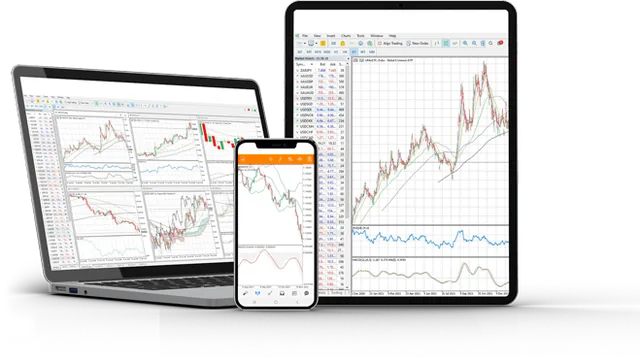
Both platforms
Live chart, on the phone you already have


FSA-licensed broker · Licence SD133
Market orders
A market order executes immediately at the best price available. Execution is certain; price is not.
In normal conditions the difference between what you saw and what you got is negligible. During a data release it may not be — the spread widens and the fill moves. That difference is slippage.
Use market orders when being in the trade matters more than the exact entry, which for most position-trading is the case.
Limit orders
A limit order executes only at your price or better. Price is certain; execution is not.
A buy limit sits below the current price and a sell limit above it. You are saying you will take the trade only at a level you consider good value, and accepting that price may never come.
The failure mode is the trade that runs without you because it never quite reached your level. That is the cost of insisting on price, and it is a real cost — just a less visible one than slippage.
Stop orders, which do the opposite of what the name suggests
A buy stop sits above the current price and a sell stop below it. It is for entering on a breakout: you want in only if price proves the move by reaching that level.
This confuses people because a stop loss uses the same mechanism defensively. Both become market orders once triggered, which is why neither guarantees a price.
The common error is placing a buy stop just above an obvious resistance level, where a brief spike triggers entry and price then falls back. Placing it beyond the level rather than on it avoids most of that.
Trailing stops
A trailing stop follows price at a fixed distance when the trade moves your way and stays put when it moves against you. It locks in progress without capping the upside.
The trade-off is that it gives back the trailing distance on every exit by design. Set it too tight and ordinary noise closes you out; too wide and it returns most of the gain.
It also requires the platform to be running, which for most retail setups means a desktop terminal or a VPS.
Expiry and weekends
Pending orders can be set to expire, and setting one is usually wise. An order placed on Tuesday for a setup that has since broken down does not improve with age.
Orders resting over the weekend are exposed to the Sunday gap: price can open beyond your level and fill you somewhere quite different. If the setup depends on a precise entry, cancel before Friday's close.
Common questions
What is the difference between a limit and a stop order?
A limit buys below the market or sells above it, seeking a better price. A stop buys above or sells below, entering only once price confirms the move.
Does a limit order guarantee I get filled?
No. It guarantees the price if it fills, but price may never reach your level.
Why did my market order fill at a different price?
Slippage. A market order guarantees execution, not price, and during news or thin liquidity the gap can be significant.
When should I use a trailing stop?
In a trending market where you want to stay in without setting a fixed target. It gives back the trailing distance on exit by design.
Do pending orders stay active over the weekend?
Yes unless you set an expiry or cancel them. They are exposed to the Sunday opening gap, which can fill you far from your level.
Which order type is best for beginners?
Market orders for entries and a stop loss for protection. Add pending orders once you are comfortable with what each guarantees.