
Leverage and margin, with real numbers
Leverage is the most misunderstood number in trading. It does not make you money faster — it makes your position larger, and the account decides everything else.
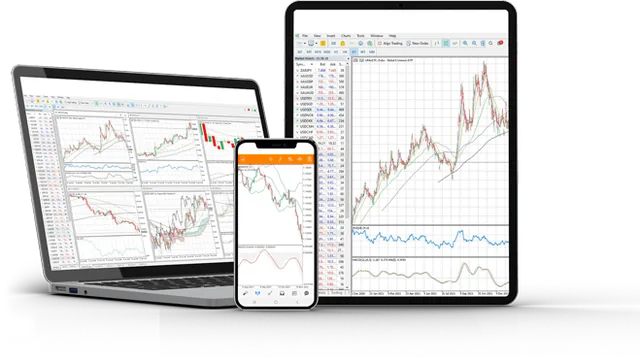
Both platforms
Live chart, on the phone you already have


FSA-licensed broker · Licence SD133
What leverage actually does
Leverage does not increase your profit per pip. It reduces the deposit required to hold a position. Those sound similar and are completely different.
A standard lot of EURUSD is 100,000 euro of currency. Without leverage you would need the full amount. At 1:500 leverage you need one five-hundredth of it as margin — about $200 — to control the same position. Your profit or loss per pip is identical either way: roughly $10 per pip on that lot. What changed is how much of your money is tied up, not how much you make or lose.
This is why leverage is neither good nor dangerous by itself. What is dangerous is using the freed-up capital to open a much larger position than you would have otherwise. High leverage does not cause blown accounts. Oversized positions do, and high leverage makes them easy to open.
What leverage you actually get on Turbo
The headline number on any broker's leverage page is the top of a scale, and ours is no different — the honest version is the scale itself.
On the Turbo account leverage is derived from account equity and recalculated as equity moves. It steps down as the account grows, because the amount at risk grows with it. On every other account type leverage is fixed when you open it: 1:500 on Standard, Cent and Zero, 1:100 on VIP.
| Account equity | Forex | Gold |
|---|---|---|
| $10 – $999 | 1:3000 | 1:1000 |
| $1,000 – $2,999 | 1:2000 | 1:500 |
| $3,000 – $4,999 | 1:1000 | 1:500 |
| $5,000 – $49,999 | 1:500 | 1:300 |
| $50,000 – $99,999 | 1:300 | 1:200 |
| $100,000+ | 1:100 | 1:100 |
Margin, free margin and the stop out
The portion of your balance locked as collateral for open positions. At 1:500, one lot of EURUSD locks roughly $200.
What is left, and therefore how much room your open positions have to move against you before there is trouble.
Equity divided by used margin, as a percentage. It falls as losses accumulate. This is the number to watch, not the balance.
As the margin level falls, you are warned; below the stop-out level, positions are closed automatically, largest loss first, to stop the account going negative. This is protective, not punitive — but it happens at the market's convenience, not yours.
Sizing a position properly
Professional sizing works backwards from risk, never forwards from leverage. Decide first what you are willing to lose on the trade — a common rule is one to two percent of the account. Then find the distance in pips to a stop level that makes sense on the chart. Position size is whatever makes those two numbers agree.
On a $1,000 account risking 1%, you are risking $10. If your stop is 50 pips away, you need a position where one pip is worth $0.20 — a fifth of a mini lot. Leverage never entered the calculation, and that is the point.
If the position size that comes out is smaller than the smallest you can trade, the trade is too big for the account. A Cent account solves this directly: it trades in cent lots, so position sizes are a hundredth of standard, which lets a small account take a sensible risk on a real trade instead of an oversized one.
Common questions
What does 1:500 leverage mean?
You can control a position 500 times the margin you put up. One standard lot of EURUSD, normally requiring 100,000 euro, needs roughly $200 in margin. Your profit and loss per pip are unaffected by the leverage figure.
Does higher leverage mean higher profit?
No. Profit per pip depends on position size, not leverage. Higher leverage only reduces the margin required, which makes it easier to open a position that is too large.
What is a stop out?
When your margin level falls below a set threshold, open positions are closed automatically, starting with the biggest loser, to prevent the account going negative. It is a protection, but it closes trades at the market's timing.
How much should I risk per trade?
Most consistent traders risk one to two percent of the account on any single trade. Decide the risk first, then let the stop distance determine your position size.