
Trading forex from Yemen
Yemen is the one market where the first question is not which broker, but which rial. The same banknote is worth very different amounts depending on which part of the country you are standing in — and that, more than anything else, is why traders here hold dollars.
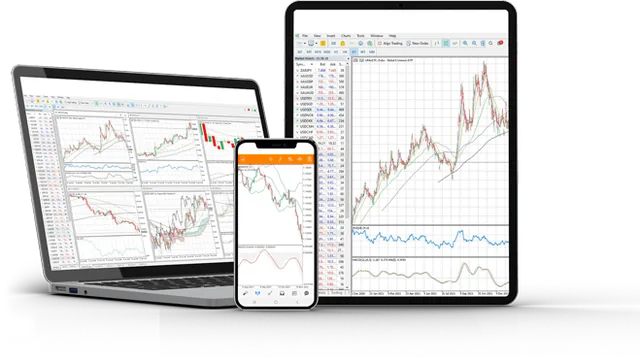
Both platforms
Live chart, on the phone you already have


FSA-licensed broker · Licence SD133
The rial has two prices, and that is the real problem
Since the central bank split between Aden and Sanaa, the rial has traded at two materially different rates. The same note buys different amounts in different cities, and the gap has moved a long way over the years rather than settling.
For anyone holding savings that is not a trading question, it is a preservation question. Money held in rial is exposed to which authority sets the rate where you live, and to a currency that has lost a great deal of its value against the dollar.
A trading account denominated in US dollars sidesteps that entirely. Your balance, your margin and your profit and loss are all in USD. The rial only enters the picture at the moment you deposit or withdraw.
What that means in practice
Deposit once and the exchange question is settled at that moment rather than continuously. From then on a $500 balance is $500, whatever the rial does in either capital.
The corollary is worth stating plainly: it also means a loss is a loss in dollars. Holding dollars protects you from the currency; it does not protect you from the market.
Regulation, stated honestly
Yemen has no licensing regime for retail forex. There is no authority issuing that permission and no register to check a broker against, so every broker serving Yemeni clients is regulated somewhere else, if at all.
TNFX is authorised as a Securities Dealer by the Financial Services Authority of Seychelles under licence SD133. That is an international licence: it carries capital, audit and client-money segregation requirements, and it does not carry an investor compensation scheme. Verify the number in the FSA's own register rather than taking our word for it.
Getting money in and out
The practical route from Yemen is usually an exchange house or a regional transfer rather than a domestic bank card. Talk to support before your first deposit and they will tell you which routes are working now — this is the part that changes most often, and a page written months ago is the wrong place to learn it.
Minimum first deposit is $100. Later top-ups have a $10 minimum. Withdrawals return by the route you funded with wherever the provider allows it.
Hours and instruments
Yemen is UTC+3, which puts the London–New York overlap — the deepest liquidity of the day — in your late afternoon and evening.
Gold is the most traded instrument on our book and the one most people here already have a feel for. Note the contract size: a standard lot is 100 ounces, so a one-dollar move is $100 on a single lot. Swap-free is available on request on any account type.
Check before you deposit from Yemen
The five facts to verify before sending money — every row is checkable, and the licence row links to the regulator's own register.
| Licence | TNFX Ltd — Securities Dealer licence SD133, Financial Services Authority of Seychelles. Verify on the FSA register. TNFX holds no licence from any authority in Yemen. |
| Deposit from Yemen | ShamCash · card (Visa/Mastercard) · USDT (TRC-20) · Ovadot wallet · Payeer · Ptop · international bank wire (from $100) |
| Minimum first deposit | $100 on Standard, Cent and Turbo; $500 on Zero. Card and wallet deposits from $5–10. |
| Withdrawal | Same routes. Minimum $50. USDT and wallet payouts usually within hours; bank wire 1–3 business days. |
| Talk to a person | Live chat on this page, 24 hours a day, six days a week (closed Saturday) · Dubai office +971 4 552 6527 · [email protected] |
Common questions
Can I trade forex from Yemen?
Yemen has no retail forex licensing regime, so there is no local permission to hold and no local register to check. Brokers serving Yemeni clients are regulated elsewhere. TNFX holds FSA Seychelles licence SD133.
Which rial rate applies to my deposit?
Whichever your exchange house or transfer provider uses at the moment you send it. That is precisely why the account itself is held in US dollars — the rate matters once, at the moment of transfer, rather than every day you hold a balance.
What is the minimum deposit?
$100 for a first deposit on a Standard, Cent or Turbo account, $500 for Zero. Later top-ups have a $10 minimum.
Is my account affected if the rial moves?
No. Balances, margin and profit and loss are all denominated in USD. The rial is involved only when you deposit or withdraw.
Do you offer swap-free accounts?
Yes, on request, on any of the five account types. It is applied to your individual account rather than granted automatically by tier, so confirm it before holding a position overnight.
What support language?
Arabic and English, 24 hours a day, six days a week.