
Copy trading at TNFX
Follow the traders whose numbers stand up. Browse real track records — return, drawdown, win rate and how long they hold — and choose who you would copy when we switch it on.
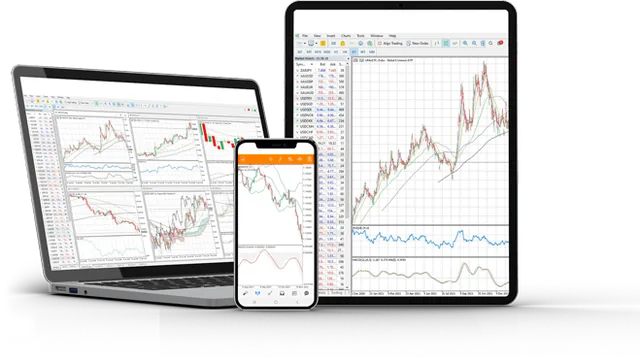
Both platforms
Live chart, on the phone you already have


FSA-licensed broker · Licence SD133
Where this stands today
We will not pretend otherwise: copy trading at TNFX is not live yet. You can browse providers and study their history now; automatic copying switches on shortly, and nothing is charged and no trade is mirrored until it does.
How to judge a strategy provider
- Maximum drawdown before return — the deepest hole tells you more than the peak
- How long the record is — three profitable weeks means nothing
- Average holding time — a system that survives news is different from one that runs from it
- Consistency — one enormous month usually means one enormous risk
- Whether they still trade — an abandoned account keeps its history
When it goes live
You will set your own allocation and risk limits, be able to stop at any moment, and keep full control of your account throughout. Copying a trader multiplies their decisions onto your balance — including the bad ones.
What copy trading actually is
It is not a signal service and it is not advice. When you copy a provider, their positions are reproduced on your own account, scaled to the size you allocate. You keep the account, the money and the ability to close anything at any time.
The part people miss is that you are not copying their returns. You are copying their position sizing, applied to your balance. A provider risking two per cent of a $100,000 account is taking a very different amount of risk from you if you allocate $300 and the copier rounds their smallest position up to a minimum lot.
This is why allocation and a maximum drawdown limit matter more than picking the right name off a leaderboard.
Look at drawdown before you look at return
Every leaderboard sorts by profit, which is the least useful column on it. A provider showing +300% with a 70% maximum drawdown is telling you that at some point their followers were down seventy cents in every dollar. Most of them did not stay to see the recovery.
The arithmetic is worth internalising because it is not symmetric. A 20% loss needs a 25% gain to get back to even. A 50% loss needs 100%. A 70% loss needs 233%. Deep drawdowns are not a rough patch — they are a mathematical hole.
So read a track record in this order: how long it is, how deep the worst loss went, how long recovery took, and only then the total return.
| Drawdown | Gain needed to recover |
|---|---|
| 10% | 11% |
| 20% | 25% |
| 30% | 43% |
| 50% | 100% |
| 70% | 233% |
A 50% loss needs a 100% gain to get back to even. Drawdown is not a rough patch — it is a mathematical hole.
What copying does not do
- It does not remove risk. It moves the decision, not the exposure. The loss is still yours.
- It does not diversify by itself. Five providers all long gold is one position, not five. Check what they actually trade before you assume you are spread out.
- It does not survive a mismatch in size. Allocating too little to a provider who trades large positions produces rounding that tracks them badly.
- It does not replace watching. Set a maximum drawdown at which copying stops automatically, and decide that number while you are calm.
Common questions
Is copy trading available now?
Not yet. You can browse providers and their track records today; automatic copying activates shortly.
Will it cost anything?
Browsing is free. Fee terms for copying will be shown clearly before you follow anyone.
Can I stop copying?
Yes, at any time — you keep control of your account and your positions.
Can I become a provider?
Yes — apply from the Traders Room once you have a track record.
Will I get exactly the same result as the provider?
No. Your result depends on your allocation, when you started copying, and how positions round to your size. Expect the shape to be similar and the numbers to differ.
How many providers should I follow?
Fewer than you think, and check what they trade. Five providers all trading gold is one position taken five times, not a diversified portfolio.
Can I still trade manually while copying?
Yes, but keep it on a separate account. Manual trades on a copying account change your margin and can interfere with how copied positions are sized.