
Is forex trading legal in Saudi Arabia?
The honest answer is more useful than a yes or no, and it starts with a fact most brokers avoid: there is no such thing as a CMA-licensed forex broker. Not because they were refused, but because the licence does not exist.
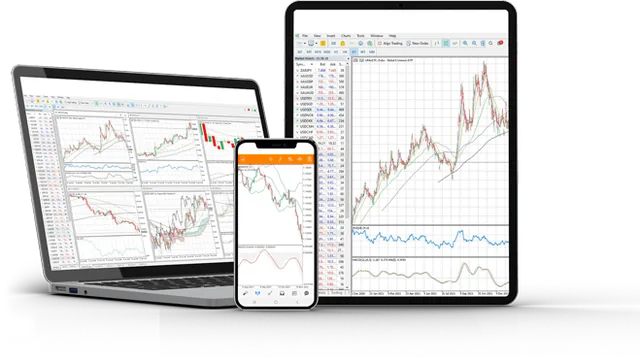
Both platforms
Live chart, on the phone you already have


FSA-licensed broker · Licence SD133
The fact almost nobody states plainly
The Capital Market Authority regulates Saudi securities and the firms operating in that market. It does not issue licences for retail margin forex or CFDs. There is no application to make and no register of approved forex brokers to appear on.
So when a broker advertises itself as "CMA licensed" for forex, it is at best describing something else and at worst inventing it. That claim is a reason to be more suspicious, not less.
Every broker serving Saudi retail forex clients is therefore regulated somewhere other than Saudi Arabia. That includes the large, well-known names as much as the small ones. It is not a distinction between the reputable and the disreputable — it is the structure of the market.
What the authorities have actually said
The CMA, SAMA and the Ministry of Commerce have issued public advisories warning against unlicensed entities, and there is a standing Permanent Committee for Awareness and Warning against unlicensed forex activity.
Those warnings are aimed at a specific pattern: firms soliciting Saudi residents while promising guaranteed or instant profits, often through social media, and frequently unable to return client funds when asked.
Read them carefully and the target is fraud and misrepresentation rather than the act of a private individual opening an account abroad. But it does mean you carry the responsibility for checking who you are dealing with, because no Saudi authority has vetted them for you.
The question to ask instead
Since "is it CMA licensed" has the same answer for every broker, it tells you nothing. The useful question is: what is this broker licensed by, and can I verify it myself in that regulator's public register?
Take the licence number the broker publishes, go to the issuing regulator's own website, and search for it. If the number appears only on the broker's own site, it is not a licence — it is a claim.
Then check what that licence actually provides. Some carry investor compensation schemes; many offshore licences do not. Neither is disqualifying, but you should know which you are getting rather than assume.
TNFX is authorised as a Securities Dealer by the Financial Services Authority of Seychelles under licence SD133. That is an international licence. It carries capital, audit and client-money segregation requirements, and it does not carry an investor compensation scheme. We would rather you read that here than discover it later.
The Sharia question is separate
Whether margin trading is permissible is a religious question, not a regulatory one, and the two get tangled together constantly. A broker is not the right authority on the first.
What we can describe precisely is the mechanics. The overnight financing charge is the component of leveraged trading that constitutes interest in the economic sense, and a swap-free account removes it. What remains is the spread and, on a Zero account, a per-lot commission — payment for a service rather than a charge for time.
There is also no delivery of the underlying asset in a CFD, and no transfer of ownership. That point is central to several scholarly positions, so it is worth taking to your question rather than leaving out of it.
Swap-free status is available on request on any account type, applied to your individual account rather than by tier.
Practical points for Saudi residents
The riyal is pegged to the dollar at a fixed rate and trading accounts are denominated in USD, so conversion in and out is effectively constant. Unlike traders in floating-currency countries, you do not take a hidden exchange loss on the round trip.
Riyadh is UTC+3, which places the London–New York overlap — the deepest liquidity and tightest spreads of the day — in the late afternoon and evening, after the working day.
Gold is the most traded instrument on our book by a wide margin, and it is what most people here already understand. Note that a standard lot is 100 ounces, so a one-dollar move is $100 on a single lot.
Common questions
Is forex trading legal in Saudi Arabia?
There is no CMA licensing regime for retail forex, so no broker holds one. Authorities have issued warnings against unlicensed entities and fraudulent promotions. A private individual opening an account with a broker regulated elsewhere is a different matter from a firm soliciting unlawfully inside the Kingdom, but the responsibility for checking the broker rests with you.
Which forex brokers are licensed by the CMA?
None. The CMA does not issue retail forex or CFD licences. Any broker advertising a CMA forex licence is misrepresenting it, and that should increase your suspicion rather than reduce it.
How do I check if a broker is genuinely regulated?
Take the licence number it publishes and search the issuing regulator's own public register. If the number appears only on the broker's website, it is a claim rather than a licence.
What is TNFX regulated by?
The Financial Services Authority of Seychelles, Securities Dealer licence SD133. An international licence with capital, audit and client-money segregation requirements, and no investor compensation scheme.
Are Islamic accounts available for Saudi clients?
Yes, on request, on any account type. Swap-free removes the overnight financing charge. Whether CFD trading is permissible for you is a religious judgement a broker should not be making.
Does the riyal peg affect my account?
Barely. The riyal is pegged to the dollar and accounts are USD-denominated, so conversion in and out is close to constant.