
Forex trading from Turkey
The SPK wrote Turkey's retail forex rule in liras. In February 2017 it set the minimum collateral at 50,000 lira, worth roughly fourteen thousand dollars at the time. The same 50,000 lira is worth about a thousand dollars today. The rule did not change; the currency did.
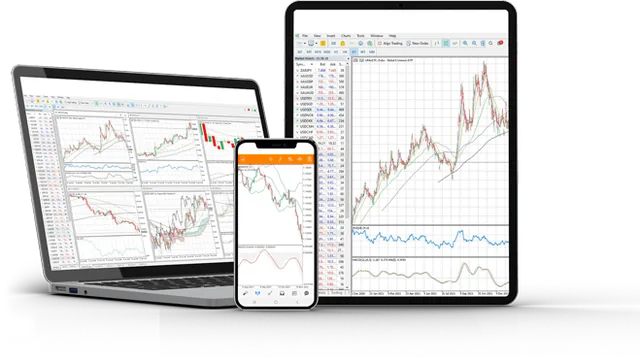
Both platforms
Live chart, on the phone you already have


FSA-licensed broker · Licence SD133
What the SPK actually requires, and why the number stopped biting
Communiqué III-37.1, as amended in the Official Gazette of 10 February 2017, caps leverage on retail leveraged transactions at 10:1 through an SPK-licensed Turkish intermediary, and sets minimum initial collateral at 50,000 lira or its foreign-currency equivalent.
Both halves were meant to work together: a hard leverage limit, plus a deposit large enough to keep small accounts out. Lira depreciation has quietly dismantled the second half while leaving the first intact, which is a strange place for a market to end up — the barrier to entry has fallen by an order of magnitude and the cap has not moved an inch.
That gap is the honest reason Turkish traders look at offshore brokers. It is worth understanding before you decide whether to be one of them.
We are an offshore broker. That is the whole answer
TNFX Ltd holds one financial licence: SD133, Securities Dealer, from the Financial Services Authority of Seychelles. We are not licensed, authorised or registered by the SPK, and we are not licensed by the FCA, ASIC or CySEC either.
So the protections that come with an SPK-licensed Turkish intermediary — the SPK's own supervision, Turkish recourse, the investor-protection machinery attached to a domestic licence — do not apply to an account with us. The SPK maintains a public list of sites it has not authorised and has access to them blocked. Whether you may lawfully deal with an offshore broker is a question for you and your own adviser; it is not advice we give.
Check SD133 yourself on the Seychelles regulator's register rather than taking our word for it, and do the same for every broker you consider.
The lira is a funding question, not a trading question
Your account is denominated in US dollars. Once it is funded, the lira has no effect on an open position — the exchange rate matters at exactly two moments, the deposit and the withdrawal.
Neither is free. Funding by card means your own bank converts at its rate and adds a foreign-currency charge, usually visible only on the statement afterwards. USDT moves a dollar value without a bank conversion, but you bought the USDT at some rate, so compare the full round trip rather than one leg.
One warning worth stating plainly: holding a dollar balance and trading leveraged CFDs with that balance are different decisions. The lira has fallen by roughly a fifth against the dollar over the past year. A mis-sized gold position can cost you more than that in an afternoon.
Six ways in from Turkey, and no Turkish rail
There are exactly six funding methods available here, and none of them is local: international bank wire from $100, credit or debit card from $10, USDT from $10, the Ovadot wallet from $5, Payeer from $10 and Ptop from $10. We do not operate a Turkish bank rail or a Turkish wallet, and we would rather say so than let you find out at the deposit screen.
Withdrawals are paid only to a method held in your own name — never to a third party, a friend's card or a company account. The practical consequence is to fund from the route you actually want to be paid back through.
The clock lines up; the network is a short hop
Turkey sits at UTC+3 all year with no daylight saving — the same clock as Mecca, and the clock the platform runs on. A candle timestamp on your chart is your own wall time. Traders elsewhere have to do arithmetic for this; you do not.
That places the London–New York overlap, the deepest liquidity of the day, in your late afternoon and evening, after the working day rather than during it. US inflation and employment data lands in the same window.
MetaTrader 4 and MetaTrader 5 run on our servers in London, in the Equinix LD4 facility, and Istanbul to London is a short network path by any standard. Orders are passed through to liquidity providers; we compete on execution, on the leverage available on the account you choose, and on a desk working in Arabic, English and Kurdish.
Check before you deposit from Turkey
The five facts to verify before sending money — every row is checkable, and the licence row links to the regulator's own register.
| Licence | TNFX Ltd — Securities Dealer licence SD133, Financial Services Authority of Seychelles. Verify on the FSA register. TNFX holds no licence from any authority in Turkey. |
| Deposit from Turkey | card (Visa/Mastercard) · USDT (TRC-20) · Ovadot wallet · Payeer · Ptop · international bank wire (from $100) |
| Minimum first deposit | $100 on Standard, Cent and Turbo; $500 on Zero. Card and wallet deposits from $5–10. |
| Withdrawal | Same routes. Minimum $50. USDT and wallet payouts usually within hours; bank wire 1–3 business days. |
| Talk to a person | Live chat on this page, 24 hours a day, six days a week (closed Saturday) · Dubai office +971 4 552 6527 · [email protected] |
Common questions
Is TNFX licensed by the SPK?
No. TNFX Ltd holds one licence, SD133 from the Financial Services Authority of Seychelles, and is not licensed or authorised by the SPK — nor by the FCA, ASIC or CySEC. You would be dealing with an offshore broker, without the supervision or local recourse that a Turkish-licensed intermediary carries. Verify SD133 on the Seychelles register directly.
Why do Turkish brokers only offer 1:10 leverage?
Because the SPK requires it. Its communiqué, amended in February 2017, caps retail leveraged transactions at 10:1 through a licensed Turkish intermediary and sets minimum collateral at 50,000 lira. That cap applies to SPK-licensed firms. It is a rule about who may offer what in Turkey, not a statement about any offshore broker.
Can I deposit in Turkish lira?
Not directly — there is no lira rail and no Turkish wallet here, and the account itself is denominated in US dollars. Your lira are converted somewhere along the way: by your bank on a card payment or wire, or by whoever sold you the USDT. The dollar amount credited is shown before you confirm.
How do I fund an account from Turkey?
Six methods, all of them international: bank wire from $100, credit or debit card from $10, USDT from $10, Ovadot from $5, Payeer from $10 and Ptop from $10. Cards and the wallets credit quickly; a wire takes one to three business days.
Can I withdraw to a different account than I deposited from?
Only if it is still in your own name. Payouts go to a method belonging to the account holder — never to a friend, a relative or a company. That is an anti-money-laundering requirement rather than a preference, so choose your deposit route with the withdrawal in mind from the start.
Does the platform clock match Turkish time?
Yes. Turkey is UTC+3 year-round with no daylight saving, the platform clock is also UTC+3 — the same as Mecca — so chart timestamps, server session times and your own watch agree. Candle opens and closes need no mental conversion, which is not true for most of our other markets.